
FAQ · Bristol, CT
Bristol Metal Roof Coating FAQ
Straight Answers on Prep, Systems, Cost, Weather, and Permits
This Bristol metal roof coating FAQ answers the questions building owners ask before a roof walk, grouped by topic.
SystemsMetal · Silicone · Acrylic · Foam · Shingle
CoverageBristol and 13 Nearby Towns
Bristol Metal Roof Coating FAQ Topics
Pick a topic below. Every answer in this Bristol metal roof coating FAQ is written for commercial roofs in and around Bristol, CT.
Ask About Your Own Roof
Call with the roof type and what you are seeing inside. Most questions get a direct answer in a few minutes on the phone.
Metal Roof Coating Services and Prep
What does a metal roof coating contractor in Bristol, CT do on a commercial building?
We clean, repair, and coat the metal roofs on commercial buildings in Bristol, CT. The work starts with a roof inspection, then pressure washing, rust treatment, fastener and seam repair, and primer where the system calls for it. We then spray or roll a fluid-applied coating to a set mil thickness, forming one continuous membrane over the panels, seams, and fasteners.
Can you coat a rusted metal roof on a Bristol, CT warehouse?
Yes, in most cases, as long as the panels are still structurally sound. Surface rust is wire-brushed or ground off, treated with a rust-inhibiting primer, and then coated. Panels that are rusted through or soft underfoot are cut out and replaced before coating, because a coating seals a surface but cannot rebuild missing steel.
How do you coat an exposed-fastener metal roof on a Bristol, CT factory?
We tighten or replace backed-out and stripped screws, swap dried-out washers, and seal every fastener head before the field coat goes down. Side laps and end laps get reinforced seam treatment, usually fabric embedded in coating, because those joints move the most. The field coat then covers the whole roof, so the fastener rows sit under a continuous membrane instead of relying on rubber washers.
How do you treat metal roof rust before coating a building in Bristol, CT?
We remove loose rust and scale by wire brushing or grinding, wash the roof to clear chalk, dirt, and oil, and let it dry fully. Treated areas get a rust-inhibiting primer matched to the coating system, and heavily pitted panels are replaced. Skipped or rushed prep is the most common reason a coating peels early, so prep takes a large share of the job.
What is commercial metal roof restoration, and how is it different from painting a roof in Bristol, CT?
Restoration is a roof system; a color coat is only paint. On a Bristol, CT commercial building, we repair fasteners, seams, flashings, and rusted panels, then apply an elastomeric coating thick enough to stretch and recover as the metal expands and contracts. Paint is a thin film that seals poorly at seams and fasteners; a restoration coating is measured in mils and built to keep water out.
Silicone and Acrylic Roof Coatings
Should a metal roof in Bristol, CT get silicone or acrylic coating?
It depends on how the roof drains and how it is used. Silicone holds up under standing water, so it suits low-slope metal roofs with spots that pond after rain or snowmelt. Acrylic is water-based, stays cleaner, and suits roofs that shed water quickly. We check slope, ponding, any existing coating, and rooftop foot traffic on a Bristol, CT roof before choosing.
What are the downsides of silicone roof coating on a Bristol, CT building?
Silicone picks up dirt more than acrylic, which dulls its reflectivity, and it is slippery when wet. Most other coatings and sealants will not bond to it, so a later recoat is usually silicone again, and repairs need silicone-compatible products. On Bristol, CT roofs that hold water, those trade-offs are often worth it; on steeper, well-drained roofs, acrylic may fit better.
How many coats of silicone roof coating does a Bristol, CT metal roof need?
Silicone often goes on in one or two coats, and what matters is the total dry mil thickness the manufacturer specifies for that roof. Seams, fasteners, and penetrations get extra material first. We measure wet mils during application so the finished membrane meets the spec across the whole roof, including the edges and corners that are harder to reach.
Does acrylic roof coating hold up on a metal roof through Connecticut winters?
Acrylic works well on metal roofs that drain freely, and it stays flexible as panels expand and contract between cold Connecticut nights and sunny days. Its limits are standing water, which softens it, and application weather: acrylic needs dry conditions and temperatures above the manufacturer's minimum to cure. We schedule acrylic work on Bristol, CT roofs for the warmer months.
What are the downsides of acrylic roof coating for a Bristol, CT building?
Acrylic does not tolerate ponding water, cures slowly in cool or damp weather, and usually needs more coats than silicone to reach thickness. Rain before it cures can wash it off. In its favor, it is water-based, recoats easily with more acrylic, and stays cleaner. We avoid it on roofs with low spots that hold water after a storm.
How many coats of acrylic coating go on a metal roof in Bristol, CT?
Acrylic systems commonly use a base coat and a top coat, often in contrasting colors so missed spots show, over a primer and seam treatment. The number of coats follows the manufacturer's dry mil requirement for the system rather than a fixed count. We check thickness as we go, because thin areas are the first to wear through.
Spray Foam and Shingle Roof Coatings
Will spray foam roofing stop leaks in a metal roof on a Bristol, CT building?
Yes, when the leaks come from open seams, loose fasteners, or worn flashings. Spray polyurethane foam fills seams and covers fasteners in one continuous layer, and a protective coating goes over it to block sunlight. We still repair damaged panels and flashings first, confirm the structure can carry the added layer, and shape the foam so water runs to the drains.
What are the pros and cons of spray foam roofing for a Bristol, CT factory?
Spray foam adds insulation, seals seams and fasteners, and can build up slope over low spots. Its drawbacks: it must be sprayed in dry, calm weather, its top coating needs periodic inspection and recoating, and birds or heavy foot traffic can damage the surface. On a Bristol, CT factory with leaking seams and a cold interior, the added insulation often tips the decision.
How does spray foam roof recoating work on a Connecticut building?
The foam is protected by an elastomeric top coat, and that coat wears over time. Recoating means cleaning the surface, repairing blisters, punctures, or exposed foam, and applying a fresh coat of a compatible product. Recoating before sunlight reaches bare foam keeps the foam itself from breaking down, so we inspect the top coat after hard Connecticut winters.
Does shingle roof coating work on commercial buildings in Bristol, CT?
It can, on asphalt shingle roofs that still lie flat and hold most of their granules. On Bristol, CT offices, churches, and older mixed-use buildings with shingle sections, a coating seals the surface and slows weathering. It does not fix curled, cracked, or missing shingles or a soft deck; those need repair or reshingling before any coating goes on.
Should a Bristol, CT building owner coat the shingle roof or reshingle it?
Coat when the shingles are intact and the deck is sound; reshingle when shingles are curling, cracking, or blowing off, or when the deck flexes underfoot. Coating keeps the existing layer in place, while reshingling tears it off and replaces it. We walk the roof, check granule loss, and look for deck movement before recommending either one.
What affects how long an asphalt shingle roof coating lasts in Connecticut?
The condition of the shingles underneath matters most, followed by coating thickness, attic ventilation, and how much shade and moisture the roof sees. Connecticut freeze-thaw cycles and ice along the eaves test any shingle roof. A coating over clean, flat, well-ventilated shingles holds up longer than one over worn shingles, so we check all of these before coating.
Cost
How much does commercial metal roof coating cost in Bristol, CT?
As a ballpark, coating a commercial metal roof runs about $2.50 to $4.00 per square foot of roof area. Where a Bristol, CT roof lands in that range depends on rust and seam prep, fastener condition, the coating system, the specified mil thickness, access, and roof size. It is a ballpark only; a site visit sets the actual price.
How does the cost of coating a metal roof compare with replacing it in Bristol, CT?
Coating runs about $2.50 to $4.00 per square foot of roof area as a ballpark, while replacement runs about $5 to $8 per square foot for comparison. Coating keeps the existing panels and skips tear-off and disposal. That gap holds only when the panels are sound; a roof needing widespread panel replacement moves closer to replacement cost. A site visit sets the real number.
What changes the price of a silicone roof coating on a Bristol, CT building?
Silicone falls within the same ballpark of about $2.50 to $4.00 per square foot of roof area. What moves it within that range: how much cleaning and rust treatment the roof needs, how many seams and penetrations need reinforcement, the specified mil thickness, whether a primer is required, and how easily crews and material reach the roof. A site visit sets the final price.
What does shingle roof coating cost for a commercial building in Bristol, CT?
The ballpark for roof coating is about $2.50 to $4.00 per square foot of roof area. On a shingle roof, the price moves with the shingle repairs needed first, cleaning, roof pitch and height, the number of valleys and penetrations, and coating thickness. Reshingling usually costs more because it adds tear-off and new materials. A site visit sets the price for your roof.
Lifespan, and Coat or Replace
How long does a metal roof coating last on a Bristol, CT building?
There is no single number; it depends on prep, thickness, and upkeep. A coating applied over well-prepared, sound metal at the full specified mil thickness outlasts a thin coat over rust or loose fasteners. Ponding water, foot traffic, and Connecticut freeze-thaw cycles wear it faster. Regular inspections, spot repairs, and recoating before the membrane thins through all extend its service life.
How long does silicone roof coating last in Connecticut weather?
Silicone's service life depends on the thickness applied, how clean the surface was, how much the roof ponds, and how much foot traffic it sees. Silicone resists sunlight and standing water well, which helps on low-slope Connecticut roofs. Dirt buildup and damage from snow removal or rooftop equipment service are the usual wear points, and silicone can usually be recoated with silicone when it thins.
How long does acrylic roof coating last on a metal building in Bristol, CT?
Acrylic's life depends on drainage, thickness, and maintenance. On a metal roof that sheds water quickly and was coated to full thickness, acrylic wears slowly; areas that hold water or take heavy foot traffic wear first. Because acrylic recoats easily, cleaning and recoating as the top coat thins keeps the system working, and we point out weak spots at each inspection.
How long does a spray foam roof last on a Bristol, CT commercial building?
A spray foam roof lasts as long as its top coating stays intact. Foam that stays covered and is recoated on schedule keeps working; foam left exposed to sunlight breaks down. Foam thickness, drainage, bird damage, and rooftop traffic also matter. We recommend an inspection after winter and after rooftop equipment work so punctures are sealed before water reaches the foam.
When should a Bristol, CT building owner coat a metal roof instead of replacing it?
Coat when the panels are structurally sound and the problems are leaking seams, loose fasteners, surface rust, or worn flashings. Replace when panels are rusted through over large areas, the structure is damaged, or the insulation below is soaked. We walk the roof, probe rusted areas, and check for wet insulation from inside before recommending either.
Can you coat an older standing-seam metal roof in Bristol, CT?
Yes. Standing-seam roofs often leak at end laps, clips, penetrations, and trim rather than in the open panel. We seal those details first, then coat the roof if the panels show rust or worn paint. Because standing seam moves with temperature, we use a coating flexible enough to stretch with the panels through Connecticut's hot summers and cold winters.
Connecticut Weather and Metal Roofs
How do freeze-thaw cycles affect metal roof coatings on Southington commercial buildings?
Water that slips under a coating at a split seam or failed fastener freezes, expands, and lifts the coating a little more with each cycle. That is why, on Southington roofs, we seal seams and fasteners before the field coat and inspect after winter. A firmly attached, full-thickness elastomeric coating flexes with the metal as it contracts on cold nights and expands on sunny days.
Can a metal roof be coated in winter on a Plymouth, CT building?
Usually not. Most roof coatings need a clean, dry surface and air and surface temperatures above the manufacturer's minimum to cure, so we schedule coating on Plymouth and Terryville buildings for late spring through early fall. During winter we handle inspections and temporary leak repairs at seams and fasteners, then coat once the weather allows a proper cure.
Does snow removal damage a coated metal roof on Winchester buildings?
It can. Metal shovels, ice picks, and snow blowers gouge coatings, especially at seams and fastener rows. On Winchester and Winsted buildings, plastic shovels and leaving a thin layer of snow on the roof protect the coating. After a heavy winter, we walk the roof and seal any scrapes before meltwater gets under the membrane.
Why do metal roofs on Thomaston factories leak at the eaves after snowmelt?
Snow melting during the day refreezes at the colder eave and gutter line, and the ice holds back meltwater that then backs up under end laps and trim. On Thomaston factory roofs, we seal the eave laps, trim, and gutter connections and carry the coating over them, so water held by ice has no open joint to enter. Clear, working gutters help too.
Permits, Codes, and Leases
Do I need a building permit to coat a commercial metal roof in Bristol, CT?
It depends on the scope, so the City of Bristol Building Department is the one to confirm it before work starts. The city states that all permits are currently applied for online. Coating jobs that also replace panels, repair structure, or add insulation are the ones most likely to need a permit, and we confirm each job's scope with the department.
Which building code covers spray foam roofing work in Connecticut?
The 2022 Connecticut State Building Code applies to projects with permit applications filed from October 1, 2022, and it is based on the International Code Council's 2021 International Codes. Questions about added insulation, roof weight, or fire ratings for a spray foam roof go to the local building official, who enforces that code for each project.
Who pays to coat the metal roof on a leased building in Bristol, CT?
It depends on the lease. Some commercial leases make the landlord responsible for the roof structure and membrane, others pass roof upkeep to the tenant, and many split repairs from replacement. Check which party the lease names for roof work before scheduling a coating. We can document the roof's condition so both sides see the same information.
Building Types and Service Areas
Is metal roof coating a good fit for Bristol, CT warehouses?
Often, yes. Warehouse metal roofs are usually large and low-slope, and their leaks tend to start at fastener rows, side laps, and skylights. A coating seals all of those in one membrane while the Bristol, CT building stays in use. We confirm the panels are sound, check for wet insulation, and plan staging around loading docks and truck traffic before work begins.
Can you coat the metal roof on a Bristol, CT precision manufacturing plant without stopping production?
In most cases, yes. Coating work happens on top of the roof, so we plan it around the plant: staging away from shipping areas, coordinating with maintenance to shut down or protect air intakes near the work, and controlling overspray near rooftop equipment. Water-based acrylic systems have lower odor, which can matter for plants with sensitive processes.
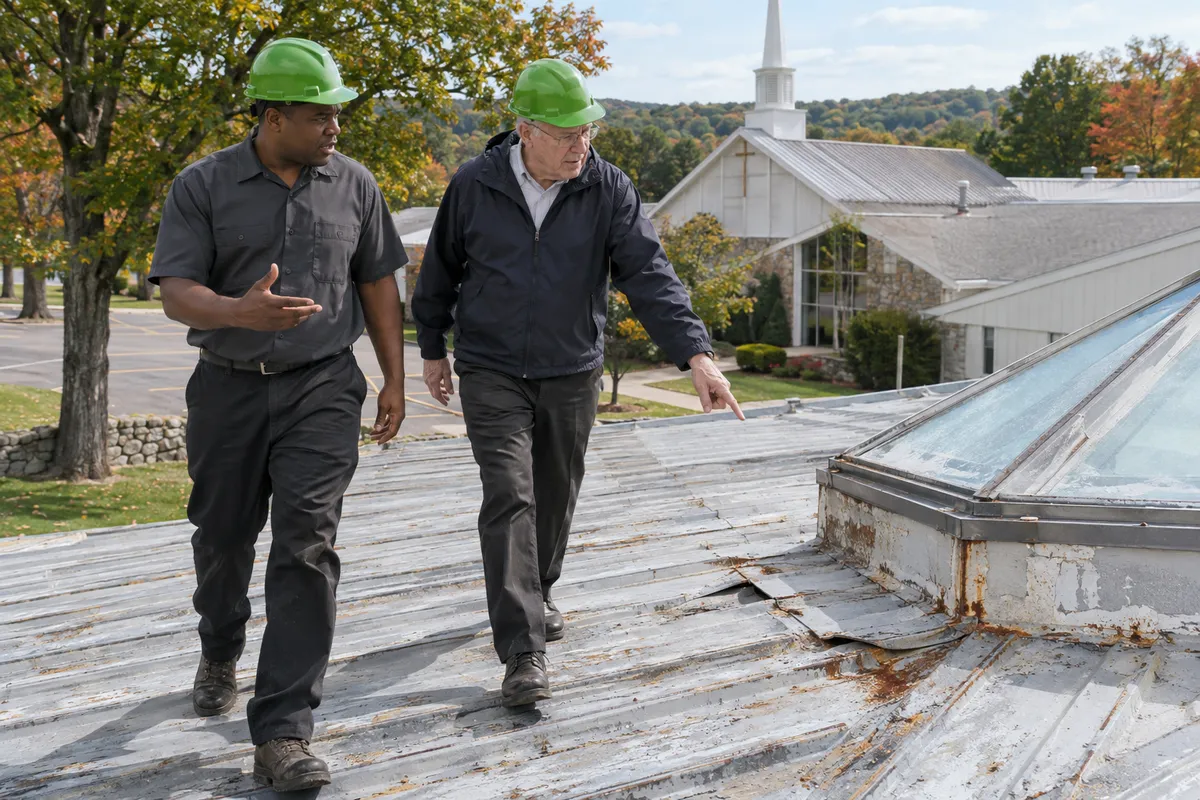
Can you coat the roofs of Bristol, CT churches with metal or shingle sections?
Yes. Many church buildings combine a steep shingle or metal main roof with low-slope additions. On a Bristol, CT church, we coat each section with a system suited to its slope and material, seal the flashings where sections meet, and plan access around services and events. Steep sections need added fall protection and staging, which we plan before work starts.
Do you coat metal roofs on commercial buildings in Canton and Collinsville?
Yes. We coat metal roofs on commercial buildings throughout Canton, including the Collinsville area, from shops and offices to storage and light industrial buildings. Each roof gets the same process: inspection, cleaning, rust treatment, fastener and seam repair, then a coating chosen for that roof's slope and drainage. Older buildings with mixed roof sections are common, so we check every section.
Do you coat metal roofs on equipment garages and storage buildings in Burlington, CT?
Yes. We coat the metal roofs of equipment garages, storage buildings, and agricultural structures in Burlington, CT. Their exposed-fastener roofs are good coating candidates once rust is treated: we seal fasteners and laps, check ridge caps and trim, and coat the roof as one membrane. Buildings with open sides or vent gaps get extra attention at the edges, where wind-driven rain gets in.
Do you serve Plantsville, Terryville, Harwinton, Cornwall, Colebrook, and Hartland?
Yes. Along with Bristol, CT, we coat commercial metal roofs in Plantsville, Terryville, Harwinton, Cornwall, Colebrook, and Hartland, as well as Southington, Canton, Collinsville, Thomaston, Burlington, Plymouth, and Winchester. If your building is outside these towns, call us to ask whether we can reach it.
Still Have a Bristol Metal Roof Coating FAQ Question?
Call and ask, or request a free estimate. We will answer it for your roof.