Leaks at Every Lap
- You See
- Drips spread across the whole building instead of one spot.
- What It Means
- Laps and fasteners have all loosened. Foam fills them in one continuous layer.

Service · Spray Foam Roofing
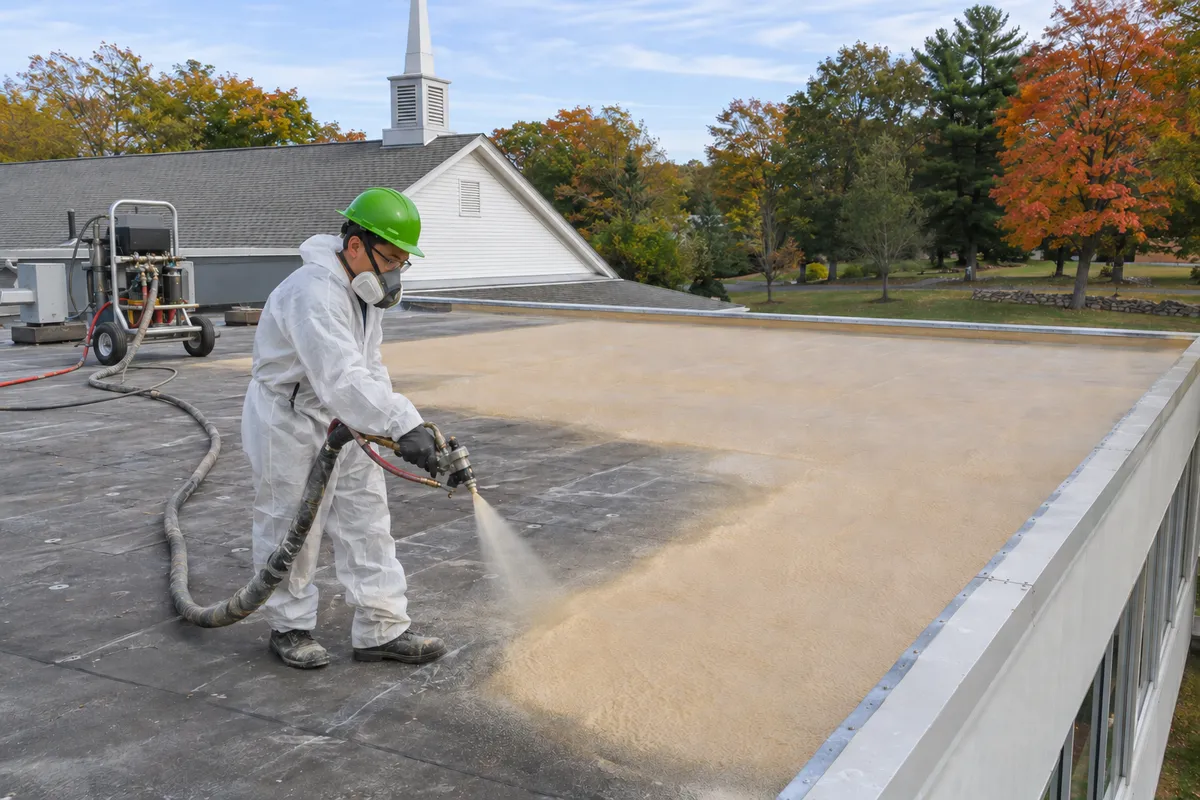
As a Bristol spray foam roofing contractor, we spray polyurethane foam over leaking steel roofs and protect it with an elastomeric top coat.
Bristol spray foam roofing fits buildings with two problems at once: leaks and cold. Here is how to tell.
Foam answers a specific set of roof conditions. These are the ones we see most.
Foam is a full roof layer with a coat on top. This table shows where it differs from the coating-only options.
| Option | Adds Insulation | Adds Weight | Handles Low Spots |
|---|---|---|---|
| Spray foam with top coat | Yes | Some, checked first | Sloped toward drains |
| Elastomeric metal coat | No | Minimal | Light ponding |
| Silicone | No | Minimal | Holds under ponding |
| Acrylic | No | Minimal | Needs fast drainage |
| Shingle coating | No | Minimal | Steep slopes only |
Foam brings these four gains to a cold steel building.
Seams, laps, and fastener rows disappear under continuous foam.
The insulating layer cuts the cold coming through bare steel panels.
Thicker foam at low spots gives water a path to drains.
Foam goes over existing steel, so there is no tear-off.
That pair is where foam makes the most sense. Call us and we will check the structure and the rooftop air intakes first.
Foam goes on fast once the prep is right. The prep and weather calls take the most care.
We check panels, flashings, drainage, and the structure, and we mark every air intake and unit on the roof that needs protection.
Damaged panels and flashings are fixed, and the roof is cleaned and dried so foam grips the steel.
Air intakes are shut down or covered with maintenance staff, and nearby equipment is masked against overspray.
Foam goes on in calm, dry weather, thicker at low spots so water runs to the drains.
An elastomeric top coat covers the foam within the window the product sets, blocking sunlight.
Not every building needs foam. These are the coating-only routes.
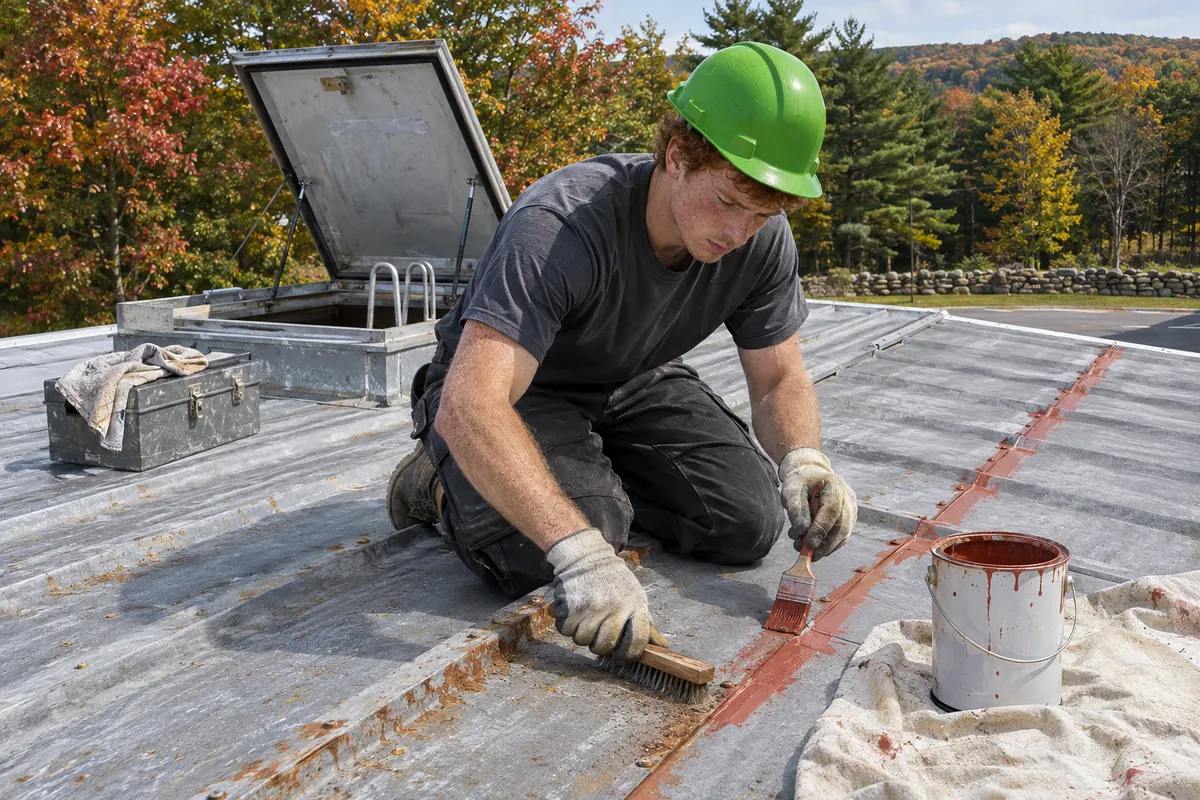
Insulated steel roofs with fastener leaks take the standard metal coating.
Bristol Metal Roof Coating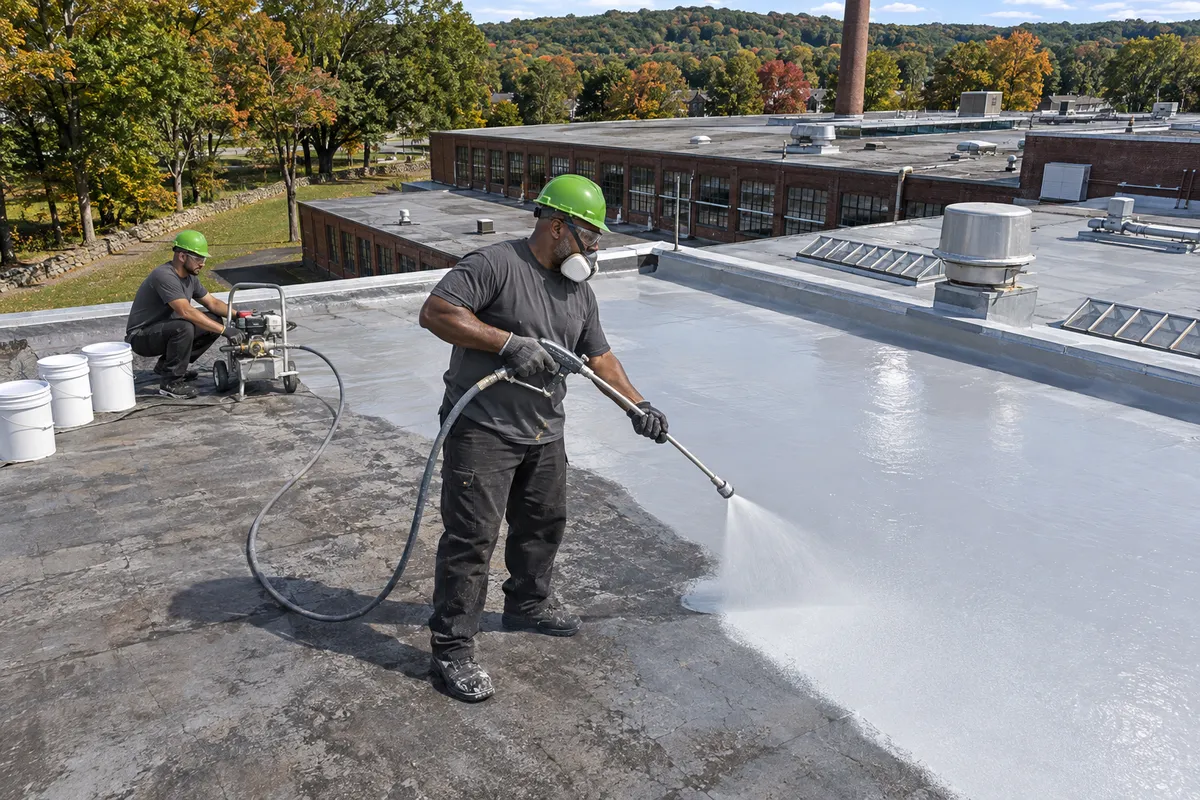
Low-slope roofs with ponding but good insulation can go straight to silicone.
Bristol Silicone Roof Coating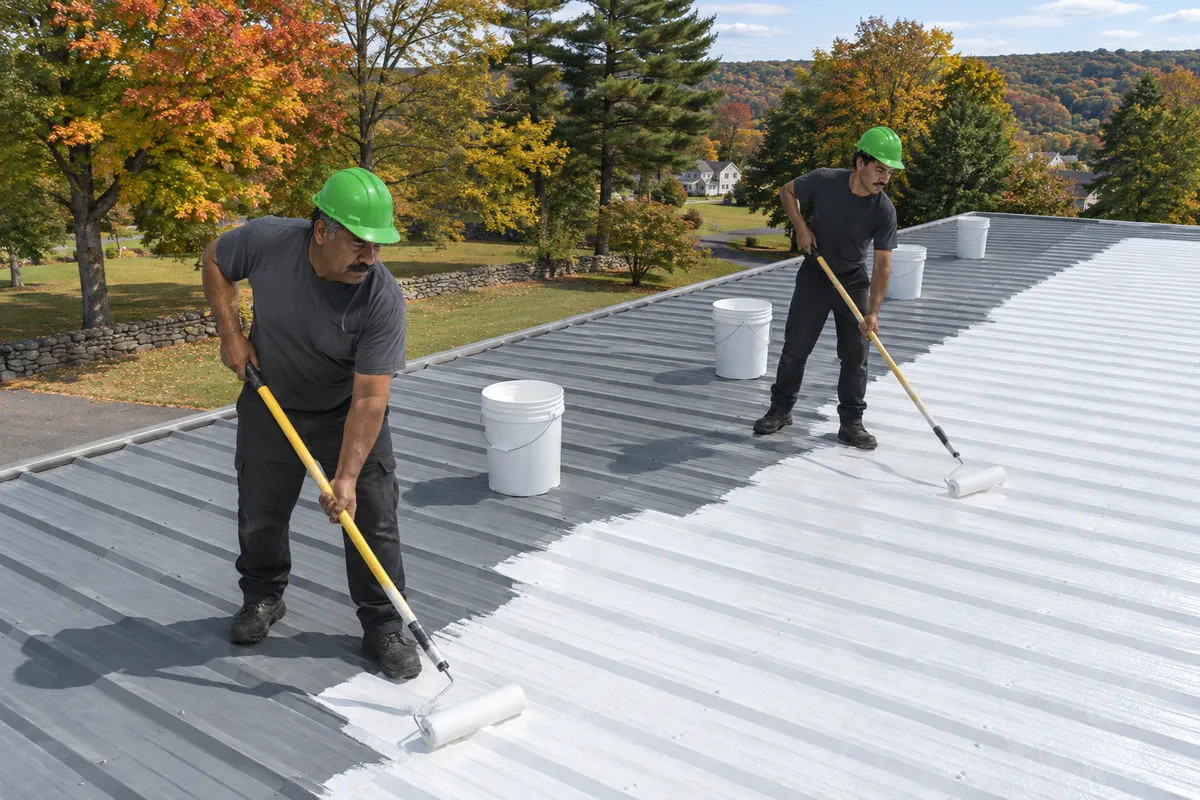
Pitched panels that drain fast can take acrylic without foam.
Bristol Acrylic Roof Coating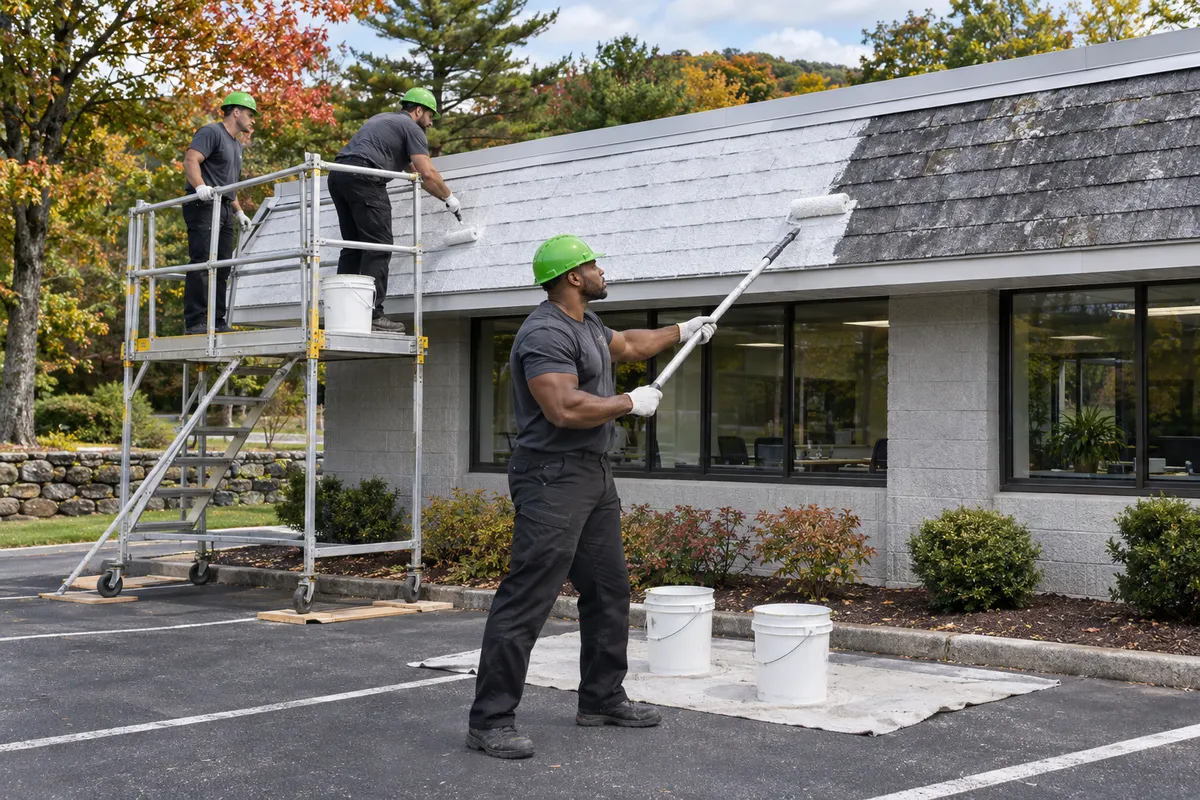
Shingle wings on the same property get their own coating.
Bristol Shingle Roof CoatingWhen the leaks come from seams, fasteners, or worn flashings, yes. Foam fills them in one layer and the top coat protects it, after damaged panels are repaired and the structure is checked.
Insulation, sealed seams, and built-up slope are the gains. Weather limits on spray days, top coat upkeep, and damage from birds or heavy traffic are the costs.
The surface is cleaned, blisters and punctures are repaired, and a compatible top coat goes on before sun reaches bare foam. An inspection after winter shows when it is due.
As long as its top coat stays intact and gets renewed. Thickness, drainage, birds, and rooftop traffic also play in, so punctures get sealed after equipment work.
The 2022 Connecticut State Building Code, for permit applications from October 1, 2022, based on the 2021 International Codes. Insulation, weight, and fire rating questions go to the local building official.
Thickness is set by the insulation the building needs and the slope required to move water to the drains. Foam is often applied thicker at low spots and thinner on high ground, and the top coat goes on at its own specified mil thickness across the whole foam surface.
Wet insulation has to be dried or removed first. Foam over trapped moisture holds that water against the deck and the panels, so the inspection includes moisture readings from inside. Sections that read wet are opened up and fixed before any foam is sprayed above them.
Birds can peck through the top coat and into the foam, letting sun and water reach it. Pecked spots are cut back, filled with fresh foam or sealant, and top coated again, and the roof walk after winter is a good time to catch them while they are small.
Tell us how cold the building runs and where it leaks. We will check the structure and price foam with its top coat.