Puddles at the Low Bays
- You See
- Dirt rings in the same spots after each storm.
- What It Means
- The deck has a low area or a clogged drain path. Silicone holds up under that water where acrylic softens.

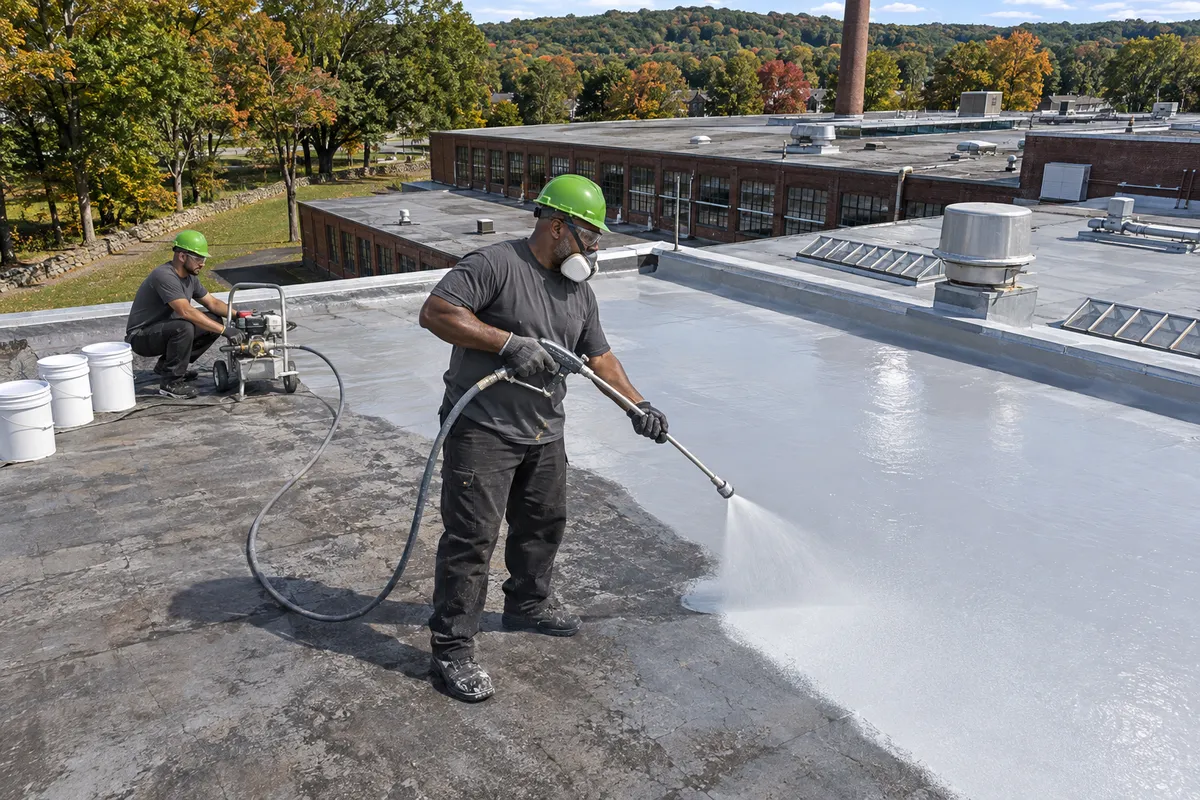
Service · Silicone Roof Coating
As a Bristol silicone roof coating contractor, we coat low-slope metal and built-up roofs that hold water after rain and snowmelt.
Bristol silicone roof coating earns its cost on roofs where water sits. These lists show when it fits and when another system is better.
Water that stays on a roof finds every weak seam. These are the conditions that bring silicone into the conversation.
Silicone sits beside four other options. The difference shows up in how each handles water and recoats.
| Option | Under Ponding Water | Later Recoat | Dirt Pickup |
|---|---|---|---|
| Silicone | Stays intact | Silicone again | Higher, dulls over time |
| Acrylic | Softens and wears | More acrylic | Lower, stays brighter |
| Elastomeric metal coat | Light ponding only | Same family | Moderate |
| Spray foam | Foam can be sloped to drain | Top coat only | Depends on top coat |
| Shingle coating | Steep roofs shed water | Shingle product | Moderate |
Silicone gives a low-slope roof these four things.
Standing water after a storm sits on the silicone without softening it.
Silicone holds up to years of direct sun on an exposed low roof.
Spec thickness often goes on in one or two passes, which shortens time on the roof.
When it thins, the roof is cleaned and recoated with silicone over the old layer.
That is the roof silicone was made for. Call us and describe where the water sits and where it shows up inside.
Silicone needs a clean, dry roof and careful seam work. Each step sets up the next.
We map where water ponds, test any old coating for adhesion, check drains, and read insulation moisture under the low spots before choosing thickness.
Pressure washing removes dirt and chalk, and ponding areas get extra attention since film left there weakens the bond.
Rusted metal and some older coatings get a primer made for silicone, while clean surfaces may go without one.
Laps, fasteners, and penetrations get silicone seam sealer or fabric before any field coat.
Silicone is sprayed to the spec, with wet mils checked often, especially at edges and corners.
Silicone often shares a building with another system.
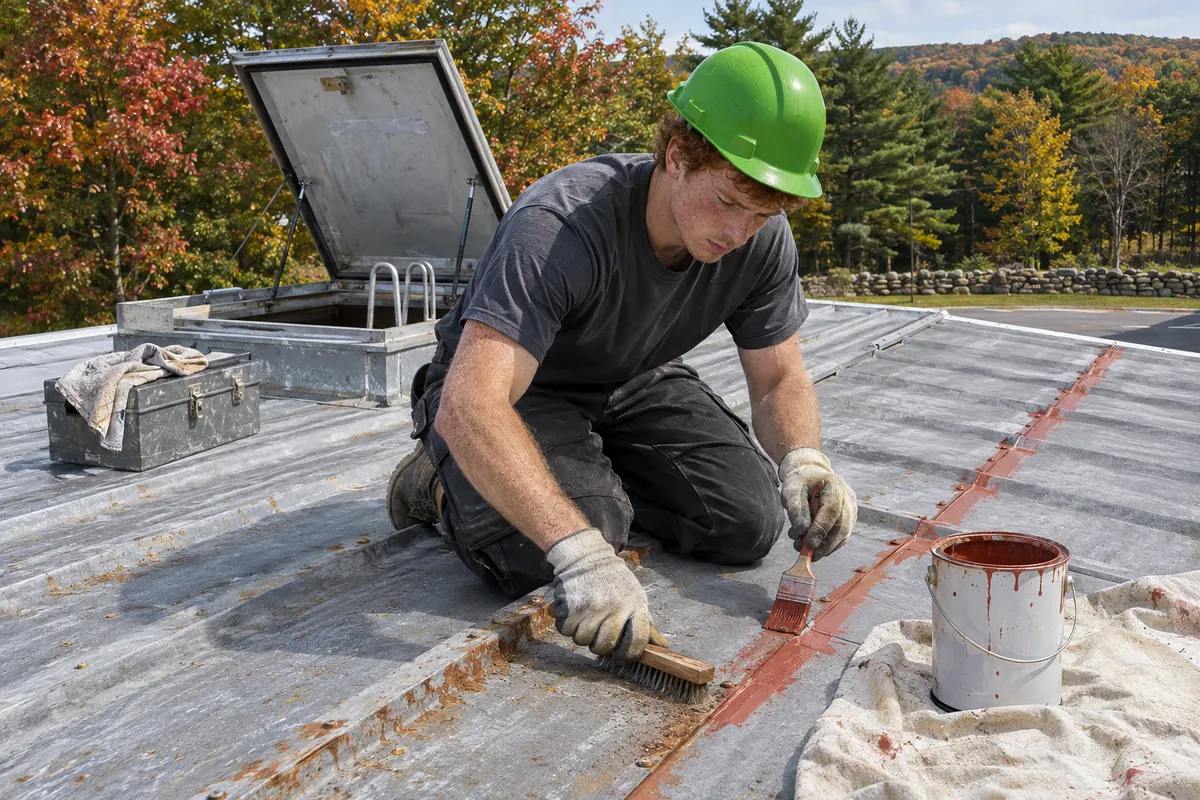
Pitched steel sections of the same plant get the standard metal system.
Bristol Metal Roof Coating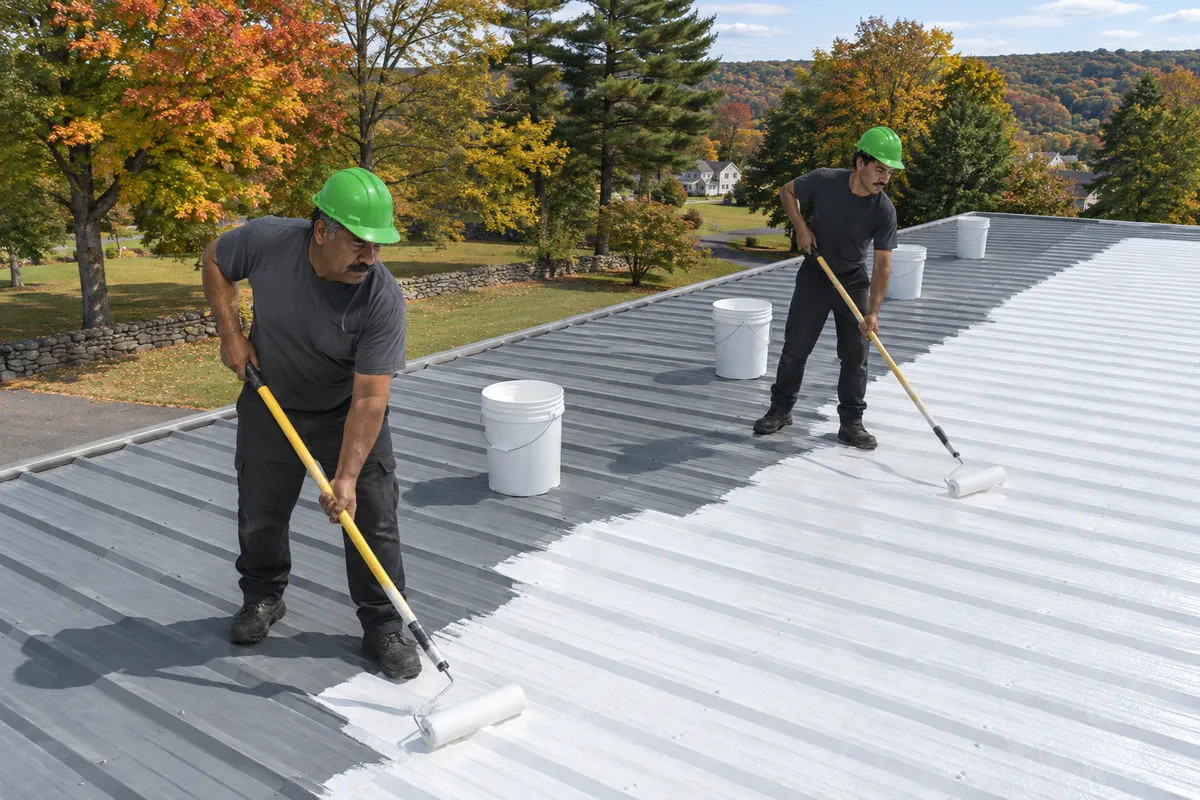
Fast-draining roof areas with heavy sun can take acrylic instead.
Bristol Acrylic Roof Coating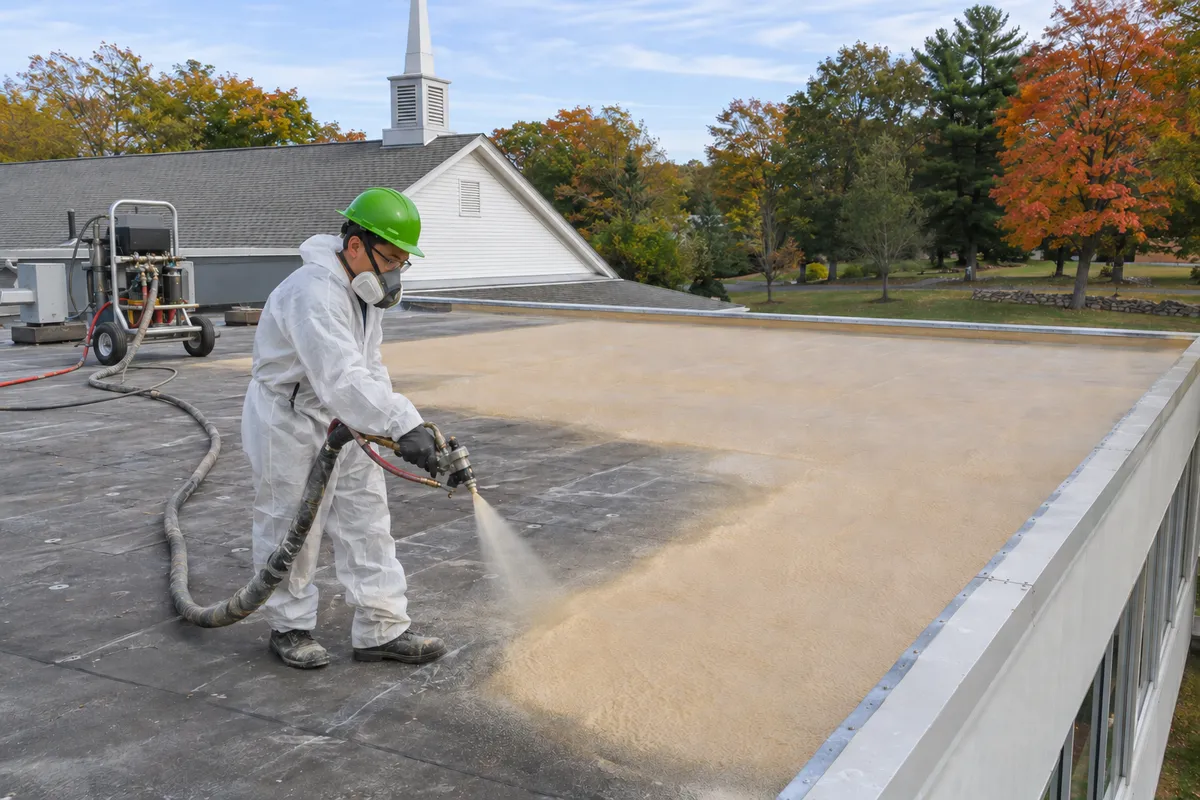
Ponding roofs that also need insulation can be foamed and sloped to drains.
Bristol Spray Foam Roofing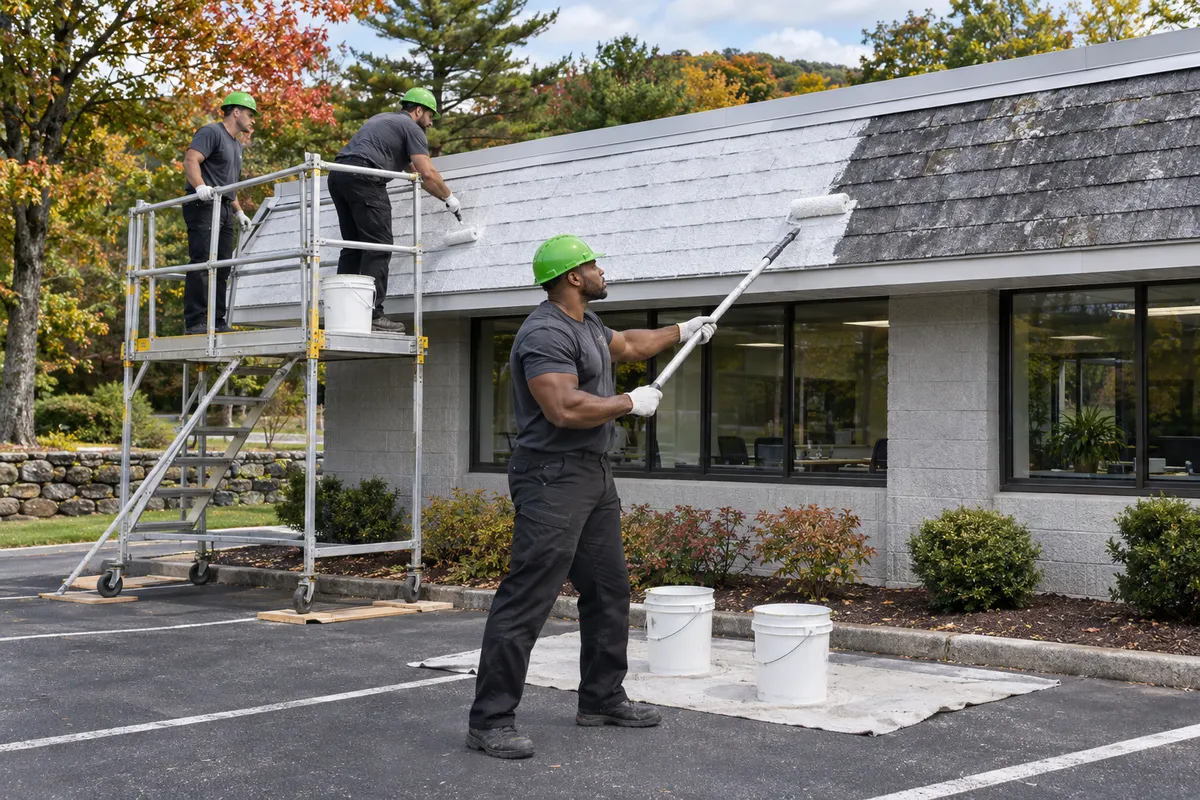
Shingle sections on mixed buildings get their own asphalt-rated coat.
Bristol Shingle Roof CoatingDrainage decides most of it. Roofs that pond after rain or snowmelt get silicone, and roofs that shed water quickly can take acrylic. Slope, any existing coating, and foot traffic settle the rest.
Dirt sticks to it more, it is slick when wet, and most other products will not stick to it later, so recoats stay silicone. On roofs that hold water, those trade-offs are usually worth it.
One or two passes, set by the dry mil thickness the manufacturer specifies. Seams and fasteners get extra material first, and wet mils are measured while spraying.
Prep, seams, thickness, primer, and access. Silicone sits in the published $2.50 to $4.00 per square foot range, and those items move a roof within it.
Thickness, surface prep, ponding, and foot traffic set its life. Dirt and scrapes from snow removal or equipment service are the usual wear points, and the fix is a silicone recoat.
Often, after testing. A clean, well-attached acrylic layer can take a primer and then silicone, while loose or chalky acrylic has to come off first. We run an adhesion test on a small area before writing silicone into the estimate, because the bond to the layer underneath decides how long the new coat holds.
Silicone, on any roof where melt sits. Snow on a low-slope roof melts slowly and can leave water standing for days, which wears acrylic down over time. On pitched metal that drains as fast as it melts, acrylic does fine, so the slope of each roof section usually settles the choice.
When wet, yes. Silicone gets slick after rain, frost, or dew, so we mark walk paths to rooftop units and can add a textured walkway coat or pads along them. Maintenance staff and HVAC technicians should know where those paths run before their next trip onto the roof.
Tell us where the water sits. We will check the seams and drains and price silicone for that roof.