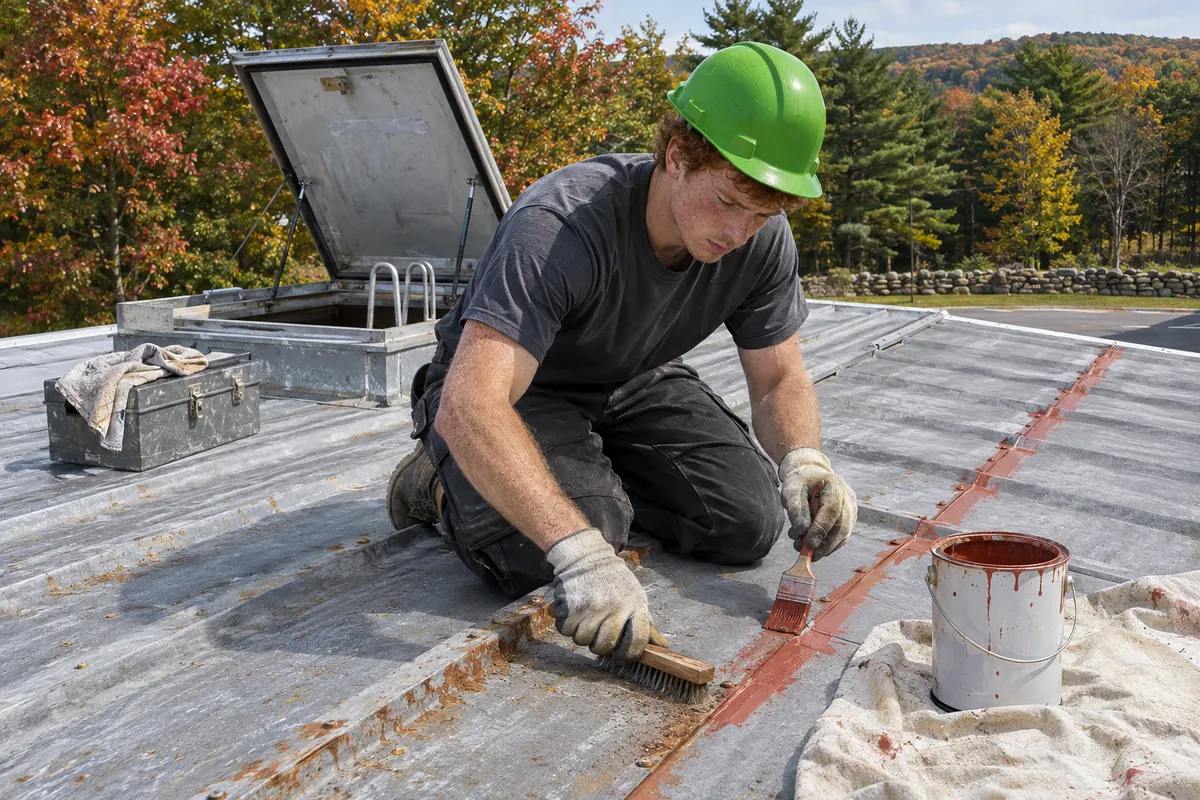
Metal Roof Coating
Exposed-fastener and standing-seam panels with backed-out screws, open laps, or surface rust get fastener work, primer, and a full elastomeric field coat.
Bristol Metal Roof Coating
Bristol, CT · Commercial Metal Roofs
As a Bristol metal roof coating contractor, we clean, repair, and coat metal roofs on factories, warehouses, churches, and shops in Bristol, CT and 13 nearby towns.
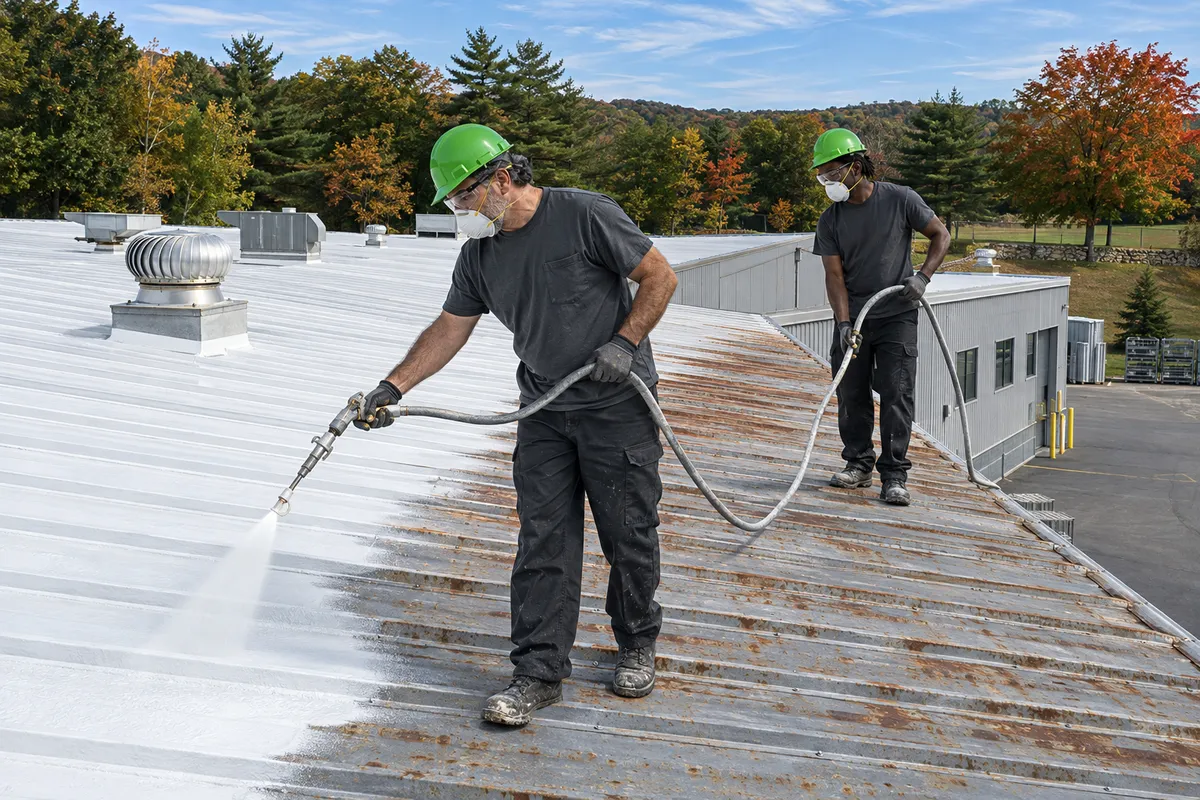
Our Bristol metal roof coating work covers five systems, each matched to how a roof drains, what it is made of, and what has failed on it.
Exposed-fastener and standing-seam panels with backed-out screws, open laps, or surface rust get fastener work, primer, and a full elastomeric field coat.
Bristol Metal Roof Coating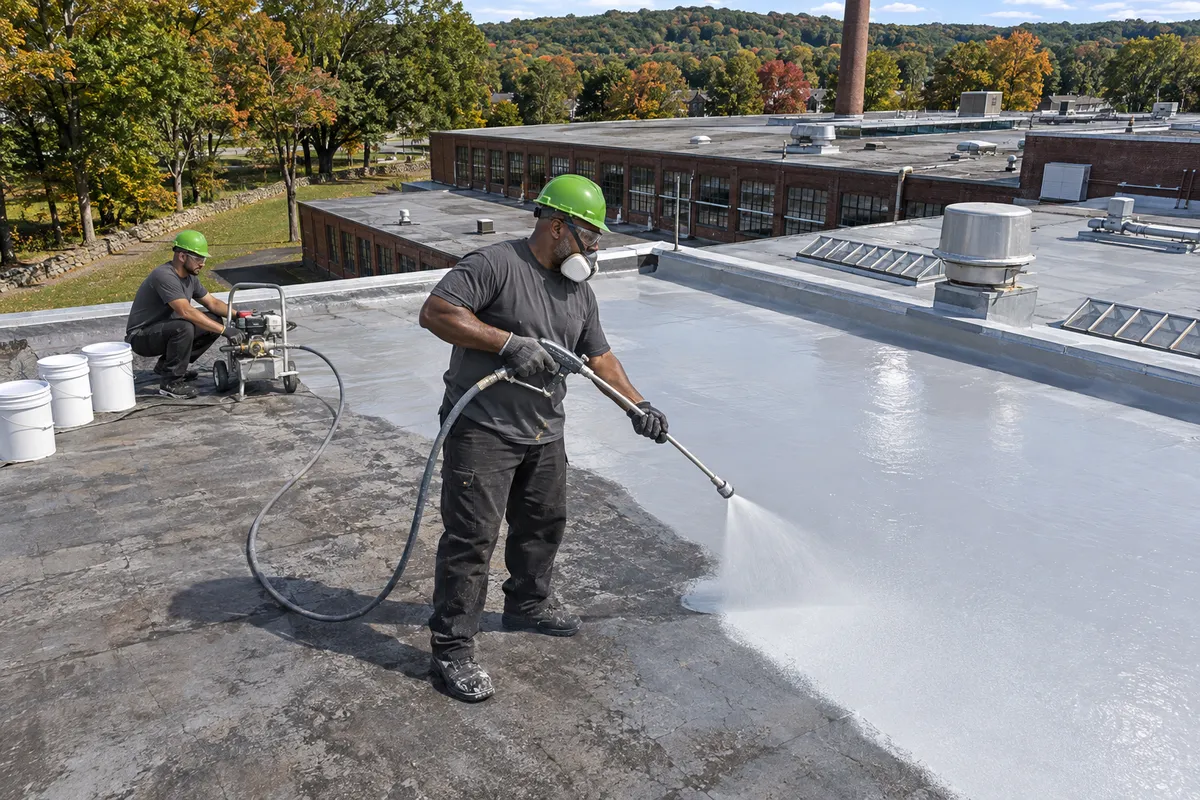
Low-slope metal or built-up roofs that hold water after rain or snowmelt take silicone, which stays put under ponding where other coatings soften.
Bristol Silicone Roof Coating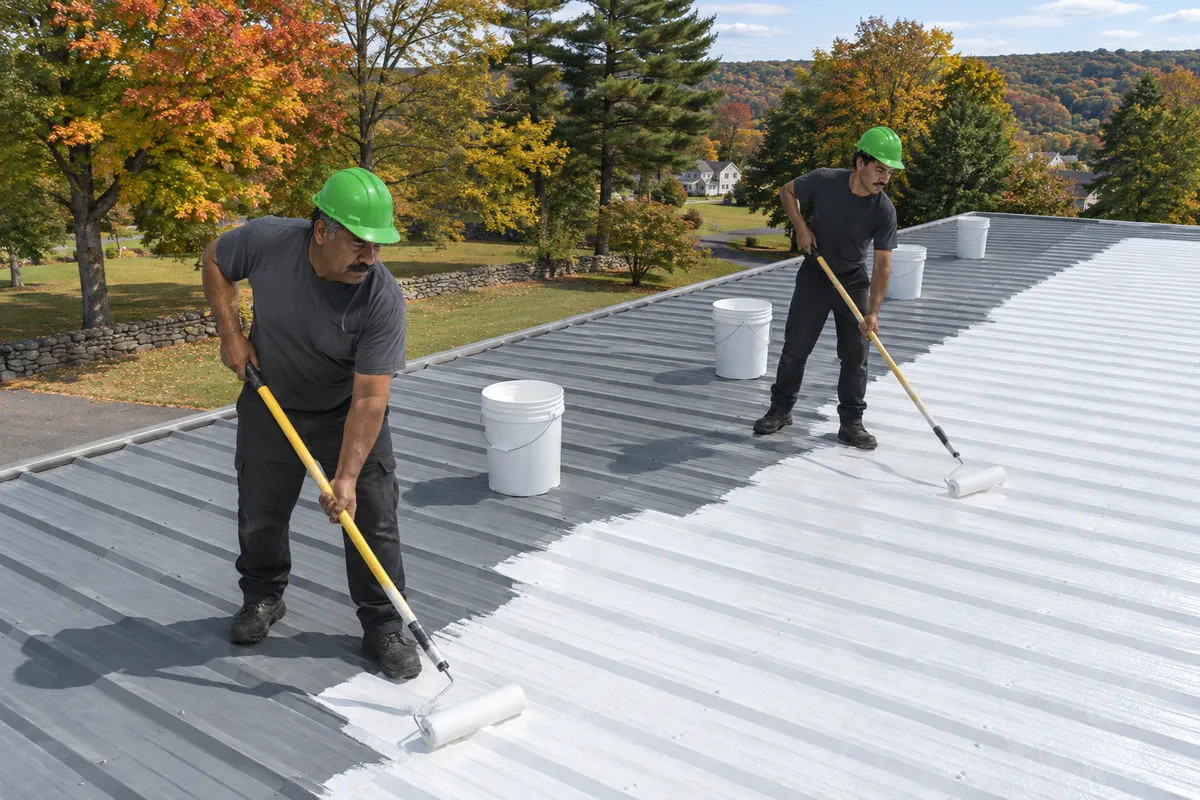
Pitched metal that sheds water fast takes a water-based acrylic base and top coat, applied in warm, dry stretches so it cures before rain.
Bristol Acrylic Roof Coating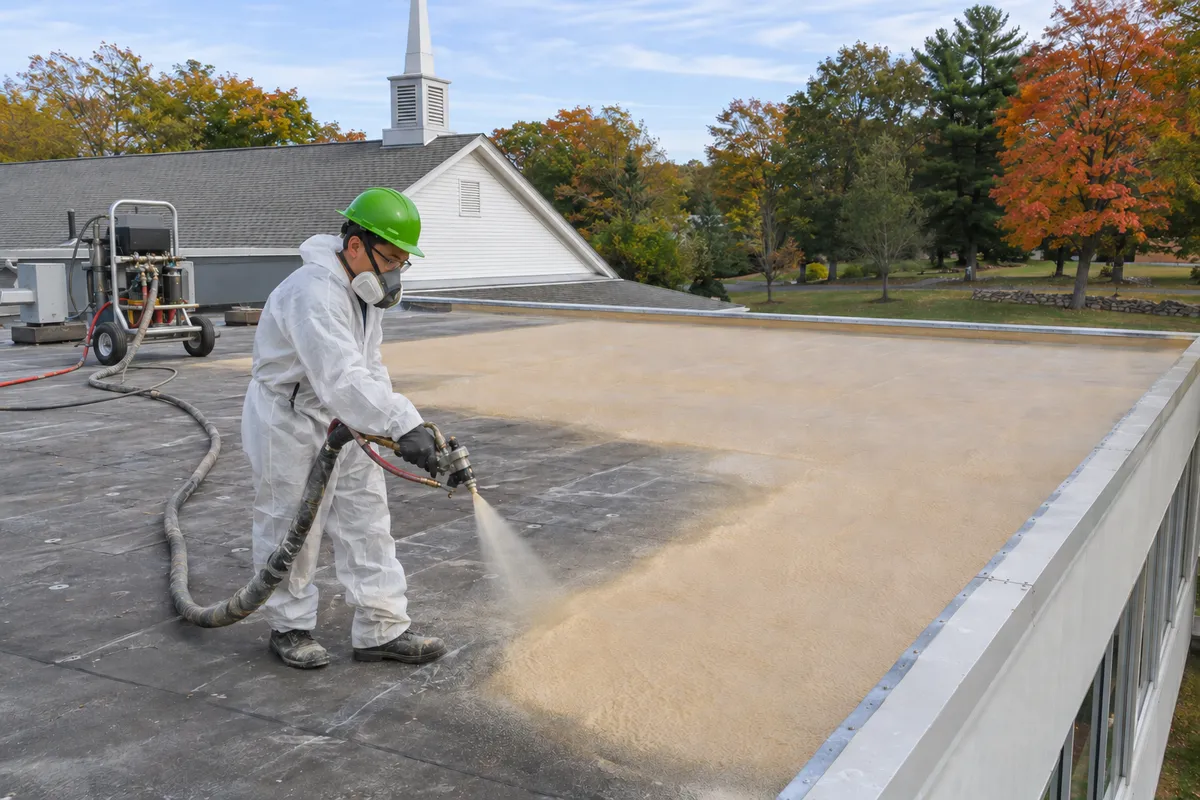
Leaking seams over a cold, uninsulated steel building call for sprayed foam that fills laps, covers fasteners, and adds insulation under a top coat.
Bristol Spray Foam Roofing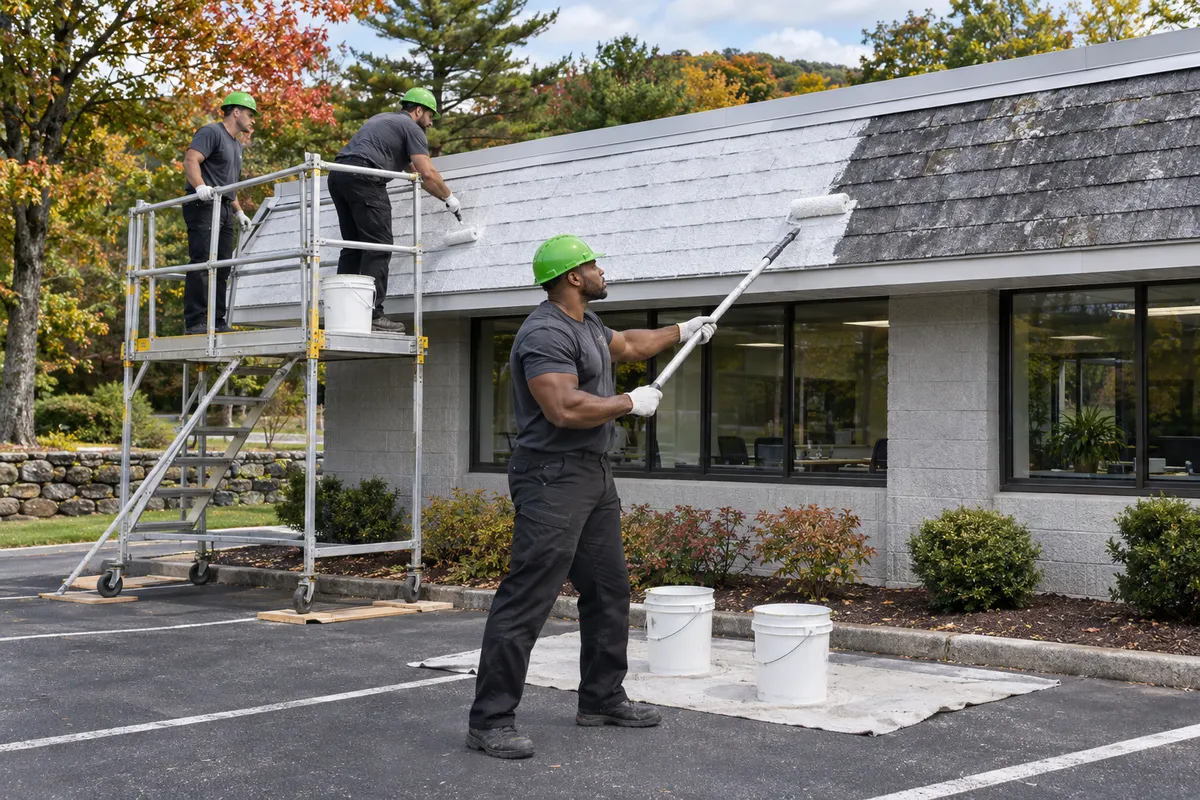
Flat-lying asphalt shingle sections on offices, churches, and mixed buildings get a coating that seals the surface once curled or missing shingles are fixed.
Bristol Shingle Roof CoatingMost calls start with something an owner can see from the floor or the roof hatch. Each card names the sign and what it usually points to.
Coating works on steel that is still solid. These two lists show which side a roof usually falls on before the inspection confirms it.
Call us and describe where the water shows up inside. We can set up a roof walk and seal the worst seams or fasteners until coating weather arrives.
Every job follows the same order, and the inspection decides how much prep the roof needs before any coating goes on.
We walk the roof, probe rusted panels, pull a few fasteners, and check the insulation from inside. You get a written list of repairs, the coating system, and the published ballpark range.
Pressure washing clears chalk, dirt, and oil. Loose rust is wire-brushed or ground off, then covered with a rust-inhibiting primer matched to the coating system.
Backed-out screws are replaced or upsized with new washers, and every head is sealed. Side laps, end laps, and penetrations get fabric set in coating.
Coating is sprayed or rolled to the specified mil thickness. Wet mils are checked as the crew moves so edges and corners match the open field.
A final roof walk checks thickness, laps, and drains. You get notes on what to watch and when an inspection after winter makes sense.
A coating keeps the panels in place and changes how the roof handles water, sun, and movement.
Fastener rows, laps, and flashings end up under the same coat instead of relying on rubber washers.
Treated and primed steel is sealed off from the water and air that keep rust spreading.
Work happens on top of the roof, so production lines, offices, and storage keep running below.
Existing panels stay put, which keeps dumpsters, cranes, and torn-out metal off the lot.
Light-colored coatings reflect sun off the panels, which helps the space under them in summer.
The published ballpark is about $2.50 to $4.00 per square foot, against about $5 to $8 for replacement.
Coating thickness is specified in mils and checked as it goes on, so thin spots get caught early.
When the coat wears thin down the road, it is cleaned and recoated rather than torn off.
Metal Roof Coating
Factories, shops, storage buildings, and farm sheds in these towns are where we coat metal roofs most, with Bristol as home base. Elsewhere? Call us or send us a message.
Short answers to what Bristol building owners ask most. The full set is on our metal roof coating FAQ.
Cleaning, repair, and coating, in that order. The roof is washed, rust is treated and primed, loose fasteners and open laps are fixed, and then a fluid-applied coat is sprayed or rolled to a set thickness over every panel.
Usually, if the steel under the rust is still solid. We brush or grind the rust off, prime it, and coat over it. Panels that are holed or soft get cut out and replaced first, since coating cannot replace missing steel.
About $2.50 to $4.00 per square foot of roof area is the published ballpark. Rust and seam prep, fastener work, the system chosen, the specified thickness, roof size, and access move a job within that range, and the roof walk sets the price.
Replacement runs about $5 to $8 per square foot as a ballpark, roughly double the $2.50 to $4.00 coating range. The gap shrinks when many panels need replacing, so the inspection counts holed panels before either option is priced.
That depends on the prep under it, the thickness applied, and the upkeep after. A full-thickness coat over clean, primed metal outlasts a thin one over rust, and an inspection after each winter catches scrapes and thin spots early.
Scope decides it, and the City of Bristol Building Department confirms it. The city takes permit applications online. Jobs that add panel replacement, structural repair, or insulation are the likeliest to need one.
Your lease decides. Some leases put the roof on the landlord, some put upkeep on the tenant, and many treat repairs and replacement differently. We can write up the roof's condition so both parties work from the same facts.
Often. Warehouse roofs tend to be big, low-slope, and leaky at fastener rows, laps, and skylights, which one coating covers at once. Staging is planned around docks and truck traffic so the building keeps working.
Tell us about the roof and the building. We will walk it, write up the repairs, and price the coating from the published range.